

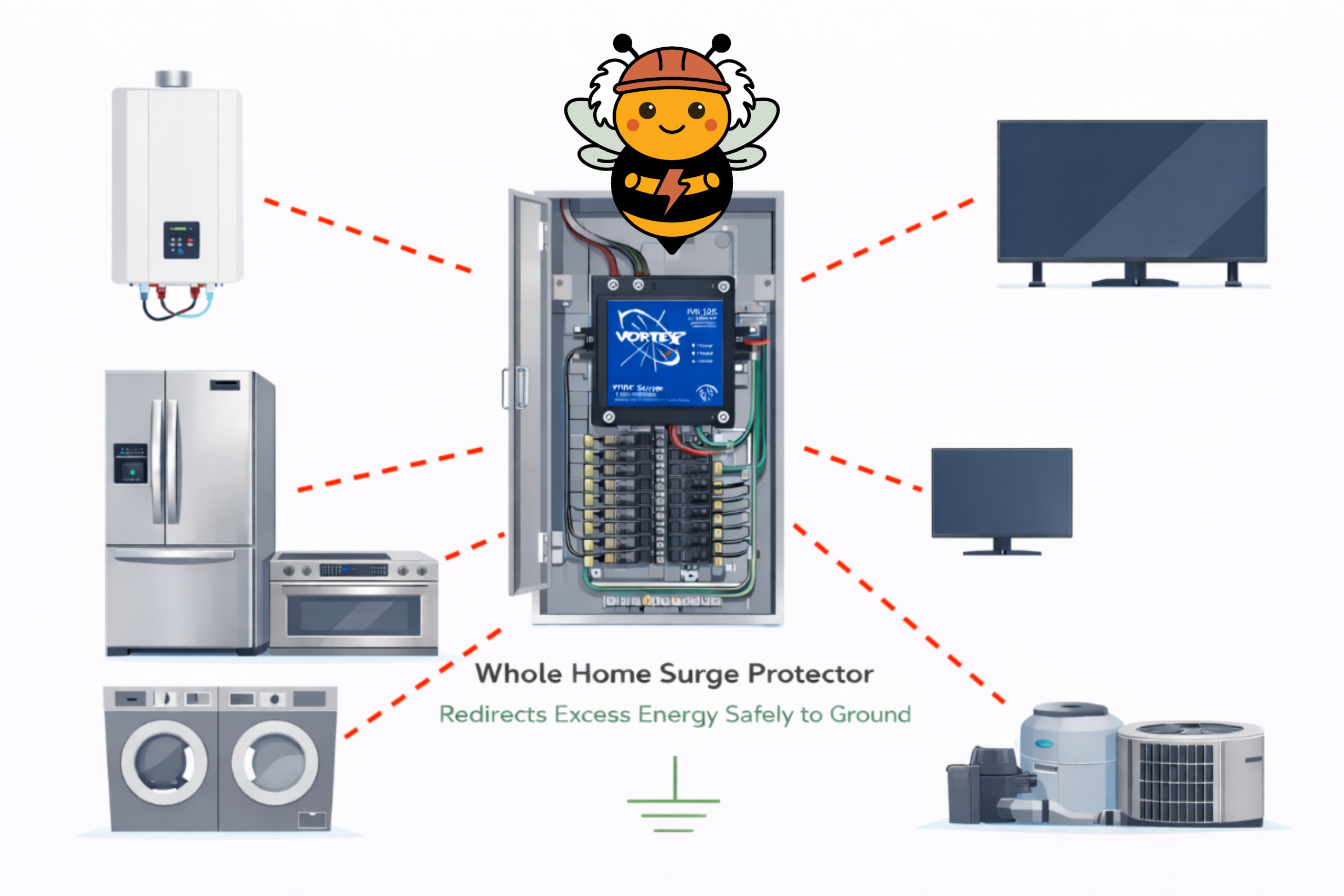
Surge protection is designed to protect the thousands of dollars’ worth of electronics most homes contain today.
Refrigerators have control boards. Air conditioners rely on circuit boards and sensors. Washers, dryers, TVs, routers, garage door openers — even modern ovens — all contain sensitive internal components.
What many homeowners don’t realize is that these systems can be damaged not only by major storms, but also by everyday electrical disturbances.
A whole home surge protector is designed to reduce that risk and is generally a relatively small investment compared to the value of the systems it helps protect.
This article explains:
- What electrical surges are
- What causes them in Florida homes
- How a whole house surge protector works
- When installing one makes practical sense
What Is an Electrical Surge?
An electrical surge is a brief spike in power flowing through your home’s wiring.
Most of the time, these spikes are so fast you never notice them. But sensitive electronics do.
Over time, repeated small surges can wear down internal components. Larger surges can cause immediate damage.
What Causes Surges in Northeast Florida?
Lightning gets the most attention — and for good reason in Florida — but it’s only part of the picture.
1. Lightning Nearby
A strike doesn’t have to hit your home directly to cause problems. A nearby strike can send excess energy through utility lines and into connected homes.
2. Power Company Switching or Restoration
When power is restored after an outage or when the utility switches grid sources, temporary spikes can occur.
3. Large Appliances Turning On and Off
Air conditioners, pool pumps, refrigerators, well pumps, and generators draw significant power when starting. That sudden demand can create small internal surges inside the home.
These smaller surges are common — and they happen more often than most homeowners realize.
What Is a Whole House Surge Protector?
A whole house surge protector (also referred to as a whole home surge protector or entire home surge protector) is installed at your electrical panel.
Its job is to monitor incoming power and step in when there’s an abnormal spike.
When a surge occurs, the device redirects the excess energy safely into the grounding system instead of allowing it to continue through your home’s circuits.
Because it is installed at the panel, it protects:
- HVAC systems
- Kitchen appliances
- Laundry equipment
- Lighting circuits
- Outlet circuits throughout the home
It acts as a first line of defense for your entire electrical system.
Are Whole Home Surge Protectors Required by Code?
The 2020 National Electrical Code (NEC) began requiring surge protection devices in most new residential construction. As a result, many newer homes already include panel-level surge protection as part of the electrical system.
Homes built prior to these code updates often do not.
This shift in code reflects how much modern homes depend on sensitive electronics and recognizes surge protection as a standard part of protecting residential electrical systems.
How Is That Different from a Surge Strip?
Plug-in surge protectors only protect what’s connected to that specific outlet.
They do not protect:
- Air conditioners
- Water heaters
- Hardwired appliances
- Lighting circuits
- The electrical panel itself
Many homeowners choose to use both:
- A whole house surge protector at the panel
- Quality surge strips for computers and entertainment systems
They serve different purposes.
A whole home surge protector helps reduce larger surges entering from outside the home, but no device blocks every small spike completely. Minor surges can still occur inside the home or pass through at lower levels. Plug-in surge protectors add a second layer of protection directly at sensitive electronics like computers and TVs. Many homeowners use both to provide broad protection at the panel and added protection where delicate equipment is plugged in.
When Does It Make Sense to Install One?
Modern homes contain a wide range of systems that rely on sensitive electronic components, including:
- HVAC systems
- Mini-split and heat pump systems
- Tankless water heaters
- Refrigerators, ovens, and dishwashers
- Washers and dryers
- Home office computers, monitors, and networking equipment
- Wi-Fi routers
- Security systems and surveillance cameras
- Garage door openers
- Pool pumps and heaters
- Irrigation controllers
- EV chargers
- LED lighting systems and dimmer controls
- Smart switches and home automation hubs
- Audio/visual and home theater equipment
When these components fail, repairs often involve replacing control boards, sensors, or power modules rather than simple mechanical parts. In some cases, parts are discontinued or cost-prohibitive, which can mean replacing the entire unit instead of repairing a single component. Compared to older mechanical systems, modern equipment can be significantly more expensive to restore once electronics are damaged.
Insurance coverage for surge-related damage varies by policy. Some homeowners insurance plans may cover certain types of electrical damage, particularly if it results from a covered event like lightning. However, deductibles, coverage limits, and exclusions apply, and filing a claim can involve time and documentation.
Some utility providers and third-party companies also offer appliance protection plans, which may help with specific repairs but often include service fees or coverage caps.
While insurance can help in certain situations, it is designed to respond after damage occurs. Surge protection is designed to help reduce the likelihood of that damage happening in the first place — which many homeowners find to be simpler and more predictable than dealing with repairs, replacements, or insurance claims after a failure.
Florida experiences more lightning activity than any other state, along with a defined hurricane season that brings outages, grid switching, and power restoration events. Even without a direct strike, these conditions can introduce electrical disturbances into a home.
Most homes operate from a single main electrical panel. A whole home surge protector is installed at that panel to help protect the systems connected to it.
Because electrical disturbances can occur at any time, many homeowners choose surge protection as a proactive step rather than waiting for a failure. It is modest compared to the value of the appliances and systems in a modern home and works continuously in the background.
When Is Surge Protection Especially Recommended?
While surge protection can benefit most modern homes, there are certain situations where it becomes particularly important:
If You’re Installing a Whole Home Generator
Generator installations involve switching equipment and additional electrical components connected to your main panel. During power outages and restoration events, transitions between utility and generator power can create electrical disturbances. Panel-level surge protection helps safeguard both household equipment and the generator system itself.
If You’ve Recently Upgraded Your Electrical Panel
If you’ve invested in a new panel, it makes sense to protect it. Modern panels often supply sensitive equipment throughout the home, and adding surge protection at the time of upgrade is straightforward.
If You’ve Added Major Equipment
New HVAC systems, EV chargers, pool equipment, tankless water heaters, or home automation systems increase your home’s reliance on electronics. The more equipment connected to your panel, the more valuable system-wide protection becomes.
If Your Area Experiences Frequent Lightning or Outages
Homes in storm-prone areas or neighborhoods with recurring power interruptions may experience more electrical disturbances over time.
In these scenarios, a whole home surge protector is less of an optional upgrade and more of a protective measure aligned with the level of equipment installed in the home.
How Long Do They Last?
Most quality whole house surge protectors last between 5–10 years, depending on:
- Frequency of surge activity
- Electrical system condition
- Device quality
Many models include indicators that show whether protection is still active.
Because they absorb energy during surge events, they wear down gradually over time.
Is It Worth It?
Rather than thinking in terms of worst-case scenarios, consider it from a maintenance perspective.
Modern homes rely on electronics more than ever. Circuit boards and appliance controls are more sensitive — and often more expensive — than older mechanical systems.
A whole home surge protector is simply one way to reduce the likelihood of electrical damage over time.
If you’re unsure whether your panel already includes surge protection, a licensed electrician can check during a routine inspection and explain your options clearly.
Ready to Protect Your Home’s Electrical Devices?
If you own your home and want to reduce the risk of costly electrical damage, a whole home surge protector is one of the most practical upgrades you can make.
We offer professional installation with transparent, flat-rate pricing — no surprises.
👉 Schedule surge protection installation online.
Or call Current Electrical Contractors at (904) 891-7050 to have your panel inspected and confirm whether your home already has surge protection installed.