

Most homeowners don’t think about their electrical panel until something goes wrong.
Recently, we received a call from a homeowner after a power surge. They described a situation that immediately caught our attention:
- A burning odor.
- Some lights suddenly much brighter than normal.
- Other lights noticeably dimmer.
These are symptoms that can indicate a potentially serious electrical problem and should always be evaluated promptly by a qualified electrician.
As we talked through the situation, we explained that if it was safe to approach the electrical panel, shutting off the main breaker could help reduce the risk while waiting for an electrician.
There was just one problem.
The homeowner couldn’t easily reach the electrical panel because it was blocked by a stacked washer and dryer.
Fortunately, the situation was resolved safely, but it served as an important reminder: your electrical panel isn’t just where your breakers are located—it’s your home’s emergency electrical disconnect.
Why Electrical Panel Clearance Matters
Most people assume the clearance around an electrical panel exists simply to make an electrician’s job easier.
In reality, it exists for safety.
Whether you’re responding to an emergency, resetting a breaker, scheduling routine maintenance, or having work inspected, the electrical panel should always be easy to reach and safe to operate.
In an emergency, you shouldn’t have to move appliances, shelving, bicycles, or storage bins just to access your home’s electrical system.
How Much Clearance Is Required?
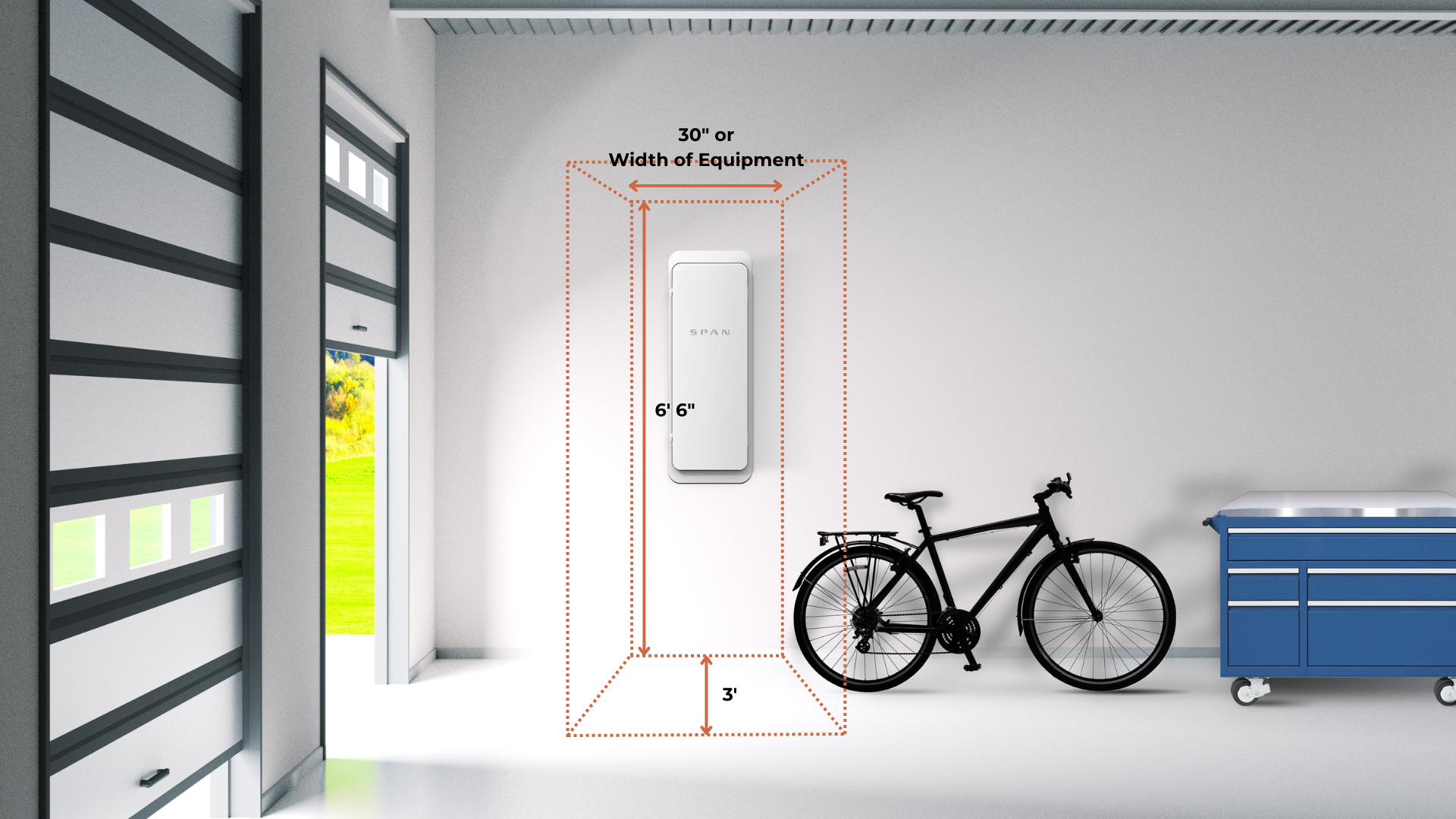
The National Electrical Code (NEC) requires a clear working space in front of residential electrical panels:
- 36 inches (3 feet) of clear space in front of the panel
- At least 30 inches of clear working width (or the width of the panel if it’s wider)
- A minimum headroom of 6 feet 6 inches
- The panel door must be able to open at least 90 degrees
These requirements help ensure there is enough room to safely inspect, operate, and service the equipment.
Common Things We See Blocking Electrical Panels
Over time, it’s easy for the space around an electrical panel to become an extension of the garage or laundry room.
Some of the most common obstructions include:
- Stacked washer and dryer units
- Shelving
- Freezers and refrigerators
- Storage cabinets
- Bicycles
- Lawn equipment
- Storage totes and boxes
Many homeowners don’t realize these items can make the panel difficult—or even impossible—to reach when it’s needed most.
Could You Reach Your Main Breaker Today?
Take a moment to answer these four questions:
- Can you walk directly to your electrical panel without moving anything?
- Can the panel door open fully?
- Could you turn off the main breaker within a few seconds if necessary?
- Is the area in front of the panel free from permanent obstructions?
If you answered “no” to any of these, it’s worth reorganizing the area before an emergency happens.
What If You Notice Dangerous Electrical Symptoms?
If you experience signs such as:
- A burning smell
- Lights suddenly becoming much brighter or dimmer
- Sparking or arcing
- Buzzing from the electrical panel
- Smoke coming from electrical equipment
take the situation seriously.
If it is safe to approach the electrical panel, turning off the main breaker may be appropriate while you wait for an electrician.
If the electrical panel is smoking, arcing, or on fire, do not attempt to operate it. Leave the home immediately, call 911, and then contact your utility company and a licensed electrician once everyone is safe.
A Simple Habit That Can Make a Big Difference
Your electrical panel is one of the most important safety features in your home.
You hope you’ll never need to access it in an emergency—but if you do, every second matters.
Today, take 30 seconds to find your electrical panel, make sure nothing is blocking it, and confirm you can reach the main breaker quickly and safely.
It’s a simple step that could make all the difference when you need it most.

Not Sure If Your Electrical Panel Is Safe?
A licensed electrician can identify potential issues, explain what you’re seeing, and recommend any improvements needed to help keep your home safe.