

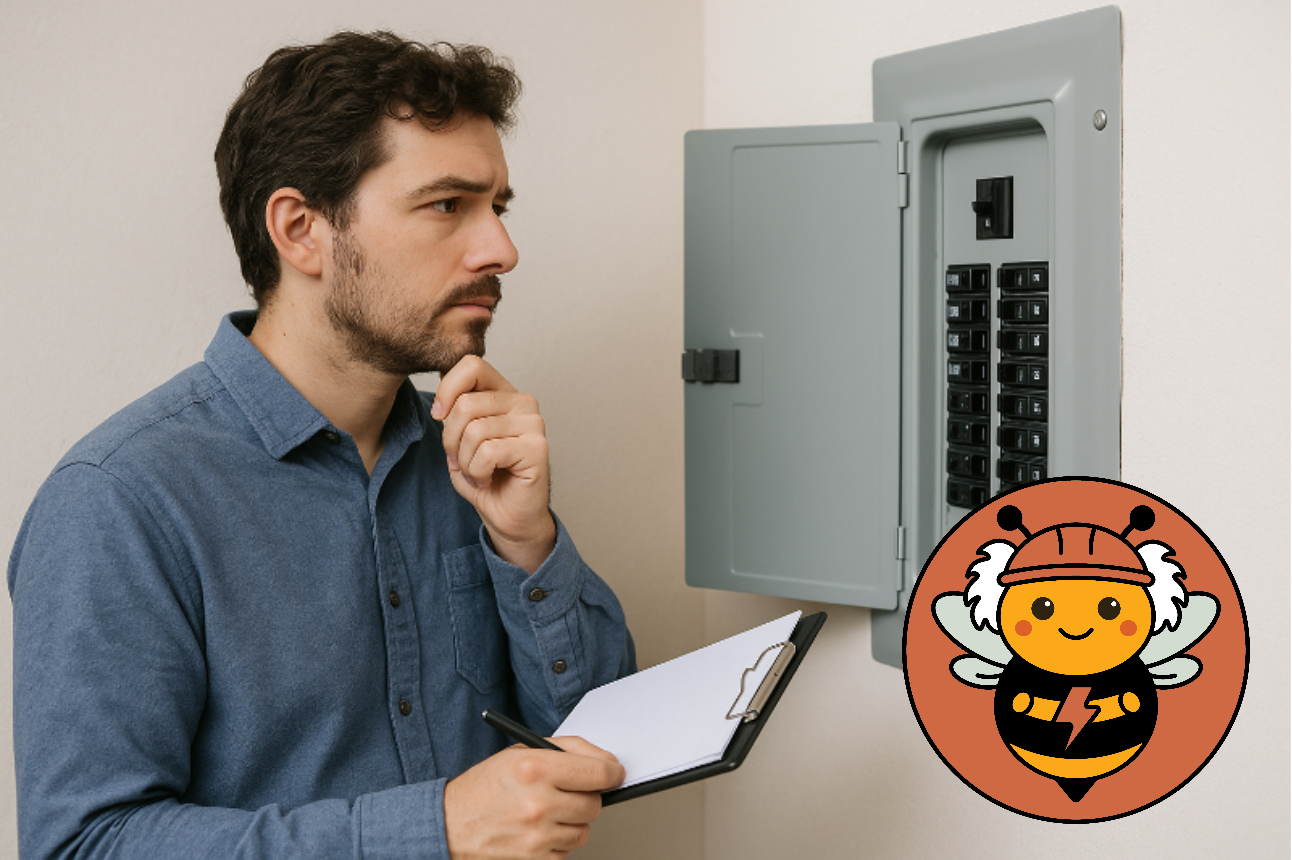
Most homeowners only think about their electrical panel when something trips, something flickers, or something new needs to be added. But doing a simple home electrical load calculation can help you understand what your system can handle, spot potential issues early, and plan future upgrades wisely.
This guide will walk you through a homeowner-friendly way to estimate electrical load — not a formal NEC calculation, but a realistic way to see whether you might be nearing the limits of your electrical panel.
We’ll also explain how a true electrical load calculation (residential) performed by licensed electrician using the NEC method is different from homeowner’s rough estimate, and why that matters when you’re adding new loads.
1. Why Your Electrical Panel Load Calculation Matters
Understanding your home’s electrical load helps you:
- Prevent nuisance tripping and flickering
- Identify overloaded circuits or service problems
- Plan for upgrades like EV chargers, heat pumps, electric ranges, or hot tubs
- Avoid unsafe wiring conditions
- Future-proof your home’s electrical system
Modern homes use far more electricity than older services were designed for. A quick service load calculation gives you early insight into whether your house is near its limits.
2. How to Check Your Electrical Service Size
Before calculating electrical load for a house, you need to know what electrical service you currently have.
Most Common Residential Service Sizes:
- 100A
- 125A
- 150A
- 200A (modern standard for new homes)
- 400A
Where to Look:
- Main breaker (usually the simplest way to identify service size)
- Label inside your electrical panel door
- Label on your meter base (without removing anything)
If the labeling is unclear — which is common — a quick professional inspection by your trusted electrician can confirm the true service rating.
3. A Simple, Homeowner-Friendly Electrical Load Calculation
This is NOT a code-compliant NEC calculation — but it’s a practical way to get a general idea of where your system stands.
Step A: List Your Major Appliances
Include anything 240V or high-wattage, such as:
- Electric range or oven
- Dryer
- Water heater
- Heat pump or AC
- EV charger
- Well pump
- Hot tub or sauna
How to Find the Wattage or Amperage Rating:
Instead of guessing, use the actual rating from the equipment. Most appliances list their electrical information in one of these places:
- Equipment nameplate — usually a small metal or sticker label
- Inside the door (ranges, microwaves, dryers, dishwashers)
- Back panel (water heaters, compressors, condensers)
- On the charger body (EV chargers and portable units)
- User manual or quick-start guide
- Manufacturer website (search your model number)
You’re looking for:
- Watts (W)
- Volts (V)
- Amps (A)
If the appliance lists amps, that’s perfect — you can skip the math.
If it lists watts, you can convert to amps in the next step.
Step B: Convert Watts to Amps
Use the standard formula used in every electrical panel load calculation:
Amps = Watts ÷ Volts
Step C: Total the Major Loads
Assume a “worst-case scenario” where all major appliances run at the same time, even though they usually don’t.
Step D: Add a General Household Load Allowance
Estimate based on home age and efficiency:
- 20–30A for efficient homes
- 30–50A for average homes
- 50–70A for large or older homes
This accounts for lighting, outlets, TVs, computers, and everyday usage.
Step E: Compare Your Estimated Load to Your Service Size
Example:
- Total calculated load: 125A
- Your service size: 150A
You’re probably fine, but may be close if adding new appliances.
If your service is 100A, you’re likely at or beyond capacity.
Pro Tip: To keep your electrical system safe, your panel shouldn’t be loaded beyond 80% of its total rating for continuous use (e.g., 150A panel → keep continuous load at or below 120A)
This isn’t just a “best practice” — it helps prevent:
- Overheating
- Breaker fatigue
- Nuisance tripping
- Long-term damage to appliances
- Fire risks from overloaded conductors
Note: This rough residential electrical load calculation is meant for planning only — not permitting.
4. How Electricians Perform a Real Service Load Calculation (vs. This Rough Estimate)
A homeowner rough estimate is great for planning and awareness — but it isn’t the same as an official residential electrical load calculation. When electricians size a service or panel, or when you apply for permits, we follow the National Electrical Code (NEC) Article 220, which lays out exactly how a service load calculation must be performed.
What makes the NEC method different?
Unlike a simple homeowner estimate, the official NEC load calculation:
- Uses specific rules and formulas found in the Code
- Applies demand factors that account for load diversity (not everything runs at once)
- Separates lighting load, appliance load, and motor load correctly
- Treats heating and cooling differently, based on which creates the larger electrical demand
- Requires accurate nameplate ratings
- Ensures the final result is code-compliant, safe, and suitable for permitting
Why this matters
The NEC method ensures that your electrical service:
- Won’t be overloaded
- Can handle long-term continuous loads (like EV charging or heat pumps)
- Has proper safety margins
- Meets code requirements for insurance, inspections, and permitting
In other words:
**Your rough estimate gives you an idea of whether you might be close.
The NEC calculation tells you whether you’re actually safe.**
This is why any project involving new appliances, EV chargers, panel upgrades, or electrification is highly recommended to rely on an electrician’s official calculation — not a quick estimate.
5. When Your Rough Calculation Isn’t Enough
It’s recommended to get a professional electrical load calculation (residential) when:
- Installing an EV charger
- Adding heat pumps or electric HVAC
- Converting from gas to electric appliances
- Adding a hot tub or pool equipment
- Remodeling a kitchen
- Building an ADU or home addition
- Experiencing tripping, dimming, or overheating
- Replacing/Upgrading your electrical panel
This ensures your home stays safe and compliant with the NEC.
6. Need an Accurate Electrical Panel Load Calculation? We Can Help.
A homeowner estimate is a great starting point — but for safe upgrades, a valid service load calculation is essential.
We provide:
- NEC-compliant load calculations
- Electrical panel evaluations
- Safe planning for EV chargers and electrification upgrades
- Transparent service upgrade recommendations
- Future-proofing strategies for your home
📞 Planning a new project or want peace of mind about your electrical capacity? Give Current Electrical Contractors a call. We’ll help ensure your home stays safe, reliable, and ready for the future.
Yours faithfully,
Your most favorite member of the team,
Albee Einstein 🐝⚡