

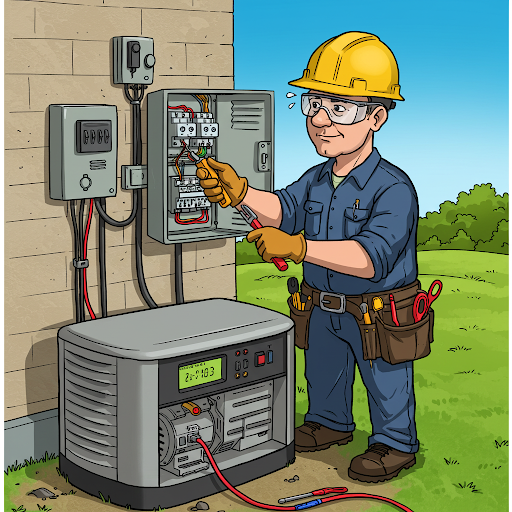
Power outages aren’t just inconvenient—they can put your home and family at risk.
Whether it’s from a storm, equipment failure, or rolling blackouts, losing electricity can mean spoiled food, extreme heat, and a whole lot of stress.
That’s where a whole-house generator comes in. Let’s break down how to size a whole-house generator.
📋 Step 1: Decide What You Want to Power
Not every generator is built to power your entire house (especially during high-demand times). You’ve got two options:
🔌 Essential Loads Only
Think: lights, fridge, sump pump, and well. and heating.
🏡 Whole-House Backup
This includes everything—HVAC ❄️, water heater, washer/dryer 🧺, stove 🍳, etc.
📋 Step 2: List and Total Your Power Requirements
Generators are rated in watts (W) or kilowatts (kW). Make a list of all the things you want running during an outage and check their power needs.
Here’s a quick cheat sheet:
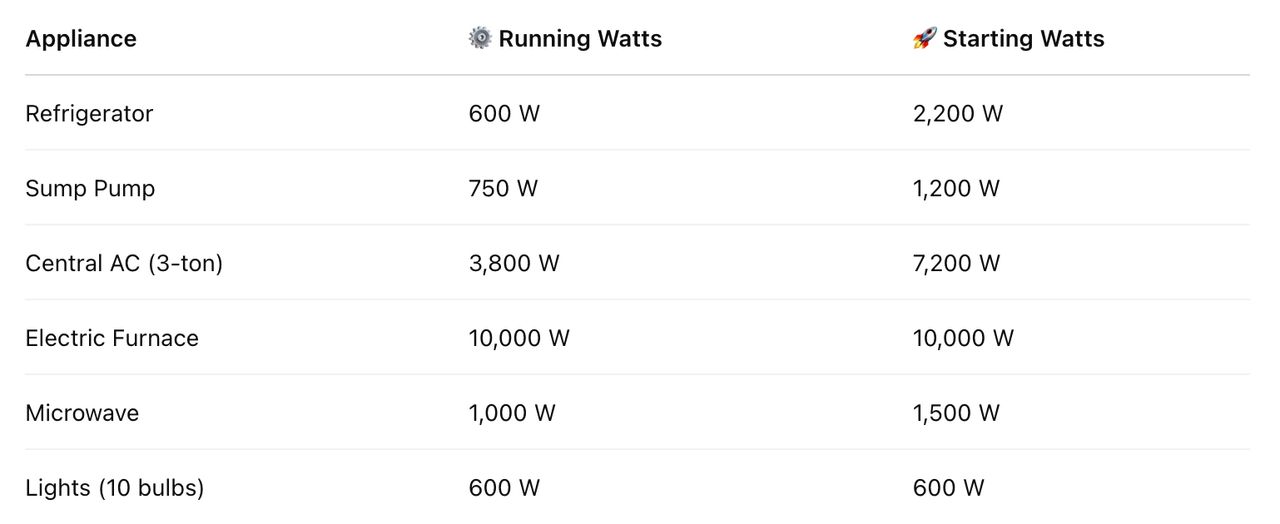
⚡ Reminder: Some appliances need extra power to start up—your generator has to handle those surge watts too!
➕ Step 3: Add a Safety Buffer
Once you’ve totaled up your running wattage, add a 20–25% buffer. This gives you room for:
🛠️ Extra appliances in the future
📈 Power spikes
📉 Efficiency losses
Example:
If your total load is 10,000 W → Add 25% →
10,000 W + 2,500 W = 12,500 W (or 12.5 kW)
Better safe than sorry!
🔍 Step 4: Choose the Right Generator Size
Here’s a rough guide for how to size a whole-house generator:
- 10–14 kW: Powers essentials in a small home
- 15–22 kW: Covers most needs in a mid-sized home
- 22–30+ kW: Full backup for large homes or high-demand setups
👷 Step 5: Talk to a Pro
Even if you love a good DIY project, sizing and installing a generator is worth running by a licensed electrician. They can:
✅ Perform an accurate load calculation
✅ Recommend air-cooled vs. liquid-cooled units
✅ Help you pick the right transfer switch
✅ Make sure your install meets code and runs safely
Final Thoughts on How to Size a Whole-House Generator
Getting the right generator = peace of mind.
By thinking through your power needs, doing a bit of math, and working with a professional, you’ll be set up to keep your home safe, cool, and powered up when the grid goes dark.
Ready to get started?
👉 Looking for reliable backup power? Explore our professional home generator installation services →
Contact Current Electrical Contractors for your reliable electrician in Jacksonville, FL! We can help you size, select, and install the perfect generator for your home.