

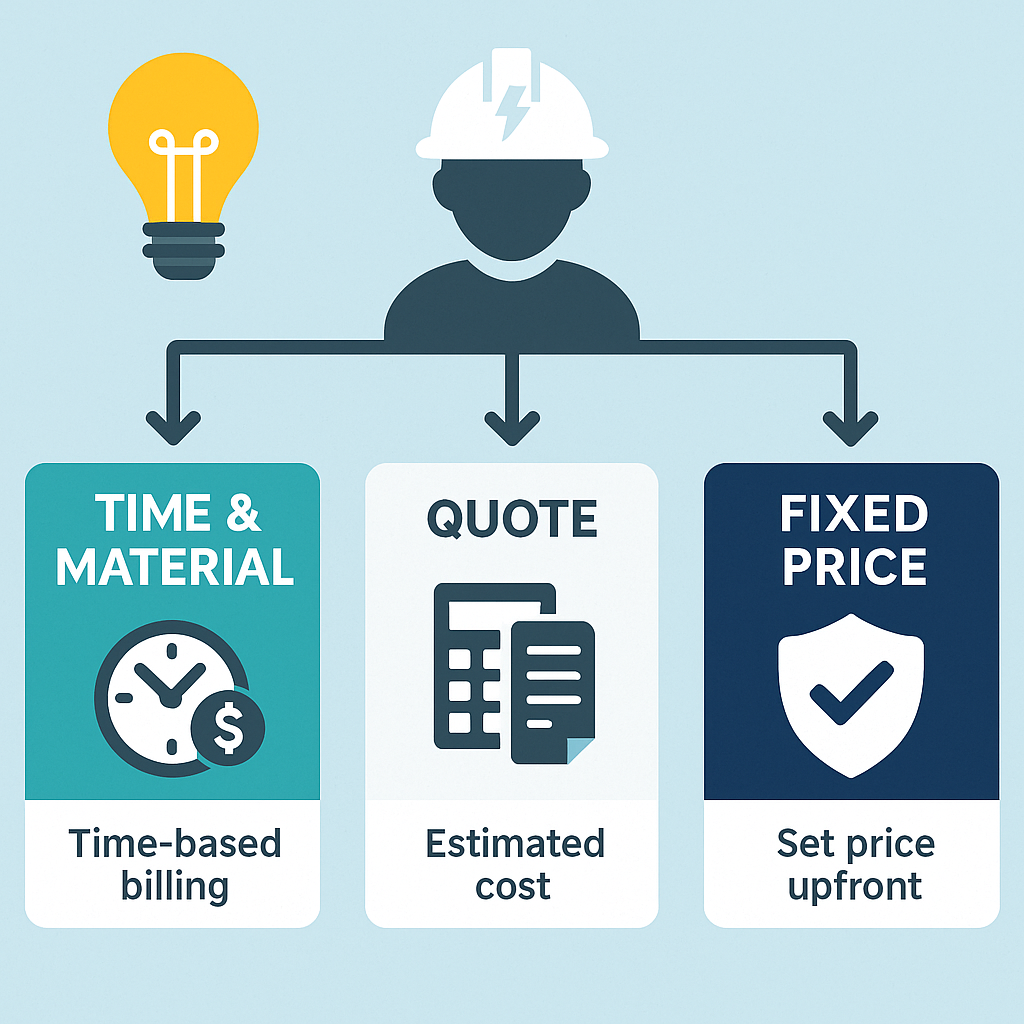
If you’ve ever hired an electrician—or even considered it—you’ve probably come across terms like time and materials, quotes, and fixed pricing. But what do they actually mean, and which one is best for your project?
In this post, we’ll break down the pros, cons, and ideal use cases of each pricing method so you can make an informed choice for your home or business.
⏱️ Time & Materials Pricing (T&M)
What it is: You pay for the actual hours worked plus the cost of materials used. Labor is typically billed at an hourly rate, and material costs are itemized.
Pros:
- Transparent billing
- Flexible for evolving projects
- You pay for actual work done—no padding
Cons:
- Final cost is unpredictable
- Can be more expensive if the job isn’t tightly managed
- Requires trust in the technician’s efficiency
🧾 Quote-Based Pricing
What it is: You get a written estimate based on a defined scope. It’s not legally binding, but it gives you a ballpark number. May shift if issues arise.
Pros:
- Provides a rough cost range
- Lets you compare contractors
- Good for planning and budgeting
Cons:
- It’s just an estimate—not guaranteed
- May lead to change orders if surprises occur
- Can vary widely depending on how thorough the contractor is
Important to Know: If the job turns out to be more complicated than expected—or if unknown issues are uncovered during the work—you’ll likely receive a change order. This is an official adjustment to the original quote, and you’ll be responsible for paying the additional cost to complete the job.
💰 Fixed (Flat) Pricing
What it is: You’re given one set price for the entire project—no matter how long it takes or what materials are needed (assuming scope doesn’t change).
Pros:
- Predictable and easy to budget
- No surprise costs
- Offers protection from price fluctuation due to work efficiency and minor unknowns/challenges
Cons:
- Price may be higher to account for risk
- Scope changes require renegotiation
- Less transparency into material/labor breakdown
Important to Know: With fixed pricing, you may pay slightly more—or less—than you would have under time-and-materials or a quote, but the difference isn’t always reflected in what you actually pay. Instead, that difference in cost acts as a form of insurance: you’re paying a little extra for peace of mind, predictability, and protection from unexpected overruns.
⚠️ What Can Derail a Job (and Affect the Price)
Even with a clear plan, electrical jobs can run into surprises—especially in older homes or when opening up walls. Some of the most common issues that can impact cost or timeline include:
- Outdated wiring or panels that must be brought up to code
- Hidden junction boxes or ungrounded circuits discovered mid-project
- Non-compliant or damaged components that the electrician is legally required to replace once accessed
- Pest damage, moisture intrusion, or corrosion to electrical components inside walls or breaker panels
- Drywall, tile, or structural features that obstruct access to electrical paths
These types of issues often trigger a change order if you’re working from a quote—or result in additional time and cost under T&M pricing.
With fixed pricing, many common issues—like replacing outdated outlets—can be included if identified during a thorough walkthrough. However, unexpected conditions such as pest damage, water intrusion, or extensive rewiring may still require additional charges unless they were part of the agreed scope.
That’s why it’s essential to choose a contractor who performs a careful assessment and explains exactly what’s covered—and what’s not—before work begins.
📣 Final Thoughts: Know Your Pricing Model Before You Commit
Before you hire any electrician, take the time to understand how they charge—and how that method affects you before, during, and after the project. Pricing models aren’t just numbers on a proposal; they shape your entire experience.
Ask questions. Read the fine print. And don’t be afraid to walk away from vague or overly flexible pricing if it leaves too much room for surprise charges.
Whether it’s time and materials, a loose quote, or a firm fixed price—what matters most is that you understand the rules before the game starts.
📞 Have questions about your next project? Give Current Electrical Contractors a call. We’ll walk you through your options, explain our pricing clearly, and help you choose the path that fits your needs and budget best.