

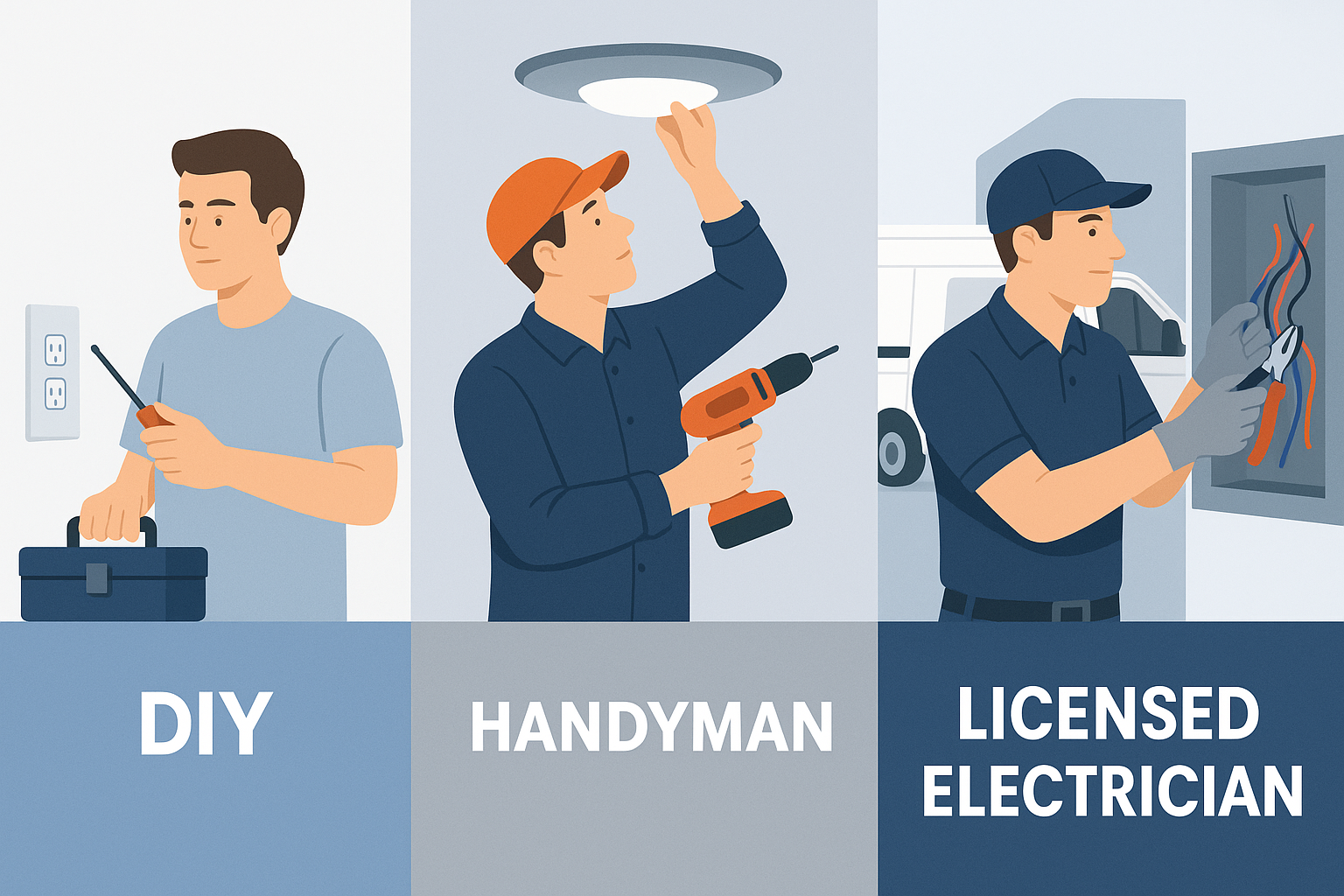
When an electrical project comes up—whether it’s a flickering light, EV charger install, or a full panel upgrade—many homeowners wonder:
Do I tackle it myself? Hire a handyman? Or bring in a licensed pro?
The answer depends on safety, scope, code requirements, and long-term peace of mind. Here’s a breakdown to help you make the right call:
🔨 Option 1: DIY Electrical Work
Best for: Extremely simple, low-risk tasks.
Examples:
- Changing light bulbs
- Resetting breakers
- Swapping out decorative wall plates
Why do your own electrical work?
- Save money
- Complete the job on your own schedule
- Take control of small home fixes
What to Know:
If you’re a confident DIYer with a solid understanding of electrical systems and local code, you may be able to tackle more advanced projects—like replacing outlets, installing dimmer switches, or replacing existing light fixtures and ventilation fans.
But keep in mind: as soon as your project involves more complicated work that requires permits, it’s time to bring in a licensed electrician. Mistakes can lead to fire hazards, failed inspections, or insurance issues—even if everything looks like it’s working.
🧰 Option 2: Handyman Services
Best for: Light, surface-level tasks where no wiring modifications are needed.
Examples:
- Changing light bulbs
- Replacing outlets or switches
- Replacing a light fixture or a ceiling fan
- Mounting a TV (if no outlet work is required)
Why hire a handyman?
- More affordable than licensed electricians
- Frees up your time for other priorities
What to Know:
Handymen are useful for general repairs, but they’re not licensed to perform electrical work that involves new circuits, panels, or any code-required changes. They often lack the training, insurance, and legal clearance to perform this work safely.
⚡ Option 3: Licensed Electrician
Best for: Any project involving system changes, permits, safety concerns, or long-term value.
Examples:
- Installing an EV charger
- Panel or service upgrades
- Whole-home generators
- Wiring for remodels, additions, or new construction
Why hire a licensed electrician?
- Peace of mind—complex jobs require safety, compliance, and expert planning
- Work is warrantied, inspected, and insured
What to Know:
Licensed electricians are trained, insured, and code-compliant professionals who ensure your project is safe, legal, and future-proof. They can pull permits, coordinate inspections, and offer warranties—protecting both your investment and your peace of mind.
💡 Why Licensed Electricians Cost More—And Why It’s Worth It
It’s easy to look at the price tag and think,
“Why does a licensed electrician cost more than a handyman—or doing it myself?”
The truth is, you’re not just paying for someone to “get the job done.” You’re paying for peace of mind, long-term safety, and legal protection. Here’s what’s actually behind the cost:
🔧 Years of Training and Experience
A licensed electrician brings more than just tools to the job—we bring professional experience protects your home from costly mistakes.
Our team has completed thousands of hours of training and hands-on fieldwork to meet licensing standards. We understand:
- How to properly calculate electrical loads to prevent overloading
- How to ground and bond wiring safely
- How to troubleshoot hidden issues inside walls and panels
- Which materials are approved, code-compliant, and built to last
This depth of knowledge helps us spot risks others might miss—and design solutions that are safe, efficient, and future-ready.
🛡️ Insurance, Bonding, and Licensing
When something goes wrong—on your property or with your system—a licensed electrician has:
- Liability insurance to cover damages
- Bonding to protect your investment
- Licensing to prove they’re qualified and accountable
Why does that matter? If someone gets hurt, or something in your home is damaged during the job, you’re protected. A handyman or DIY attempt? Not so much. If something goes wrong, you could be stuck with the bill—or worse, a lawsuit.
📋 Up-to-Code, Permit-Approved Work
Licensed pros know the National Electrical Code (NEC), local city regulations, and utility requirements (like JEA in Northeast Florida). This ensures:
- Permits are properly pulled and closed
- Work passes required inspection
- Your home stays compliant for resale or insurance
Most electrical work—especially anything involving a new circuit, panel, or generator—requires a permit by law and must pass an inspection.
This especially matters when:
- You’re selling your home
- Your home is insured
- You want to avoid fines or forced rework
Unpermitted work can derail a home sale or invalidate a home insurance claim.
🔧 Warranties and Long-Term Support
Reputable electricians stand behind their work. That means:
- Warranty coverage
- Clear documentation
- Support if anything goes wrong down the line
A cheaper job might save you money today—but you’ll often pay more later:
- Failed inspections
- Loose connections can cause fires
- Poor grounding can lead to electrocution
- Improper circuits can damage your appliances
- Full do-overs of bad work or abandoned work in progress
- Fire or insurance claims denied due to non-compliant wiring
Hiring the right pro from the beginning avoids all that—and gives you confidence it was done right.
🛠️ What You Don’t See: Behind-the-Scenes Work That Matters
A lot happens before and after you see someone on-site. Here’s what licensed electricians handle that often goes unnoticed:
✔ Understanding Your Project
They assess your needs, system limitations, and goals—and help you avoid costly oversights.
✔ Researching Code and Requirements
Every project must meet specific codes, which vary by city and project type. Your electrician does the homework.
✔ Custom Design
They design solutions that are safe, efficient, and scalable—whether for a generator, EV charger, or full home.
✔ Material Sourcing
They don’t just grab parts off a shelf. They find the right components and coordinate orders or pickups.
✔ Crew Scheduling
They assemble the right team for your job, and coordinate labor over multiple visits if needed.
✔ Travel Time and Fuel
Consultations, site visits, material pickups, and repeat trips all add time, gas, and cost—often absorbed into the project.
✔ Project Management
Especially for larger jobs, they coordinate timelines, resolve site challenges, and keep your project on track.
✔ Permits and Inspections
They file with the city, schedule and meet with inspectors, make corrections if needed, and close the permit properly—so you’re covered.
✔ Third-Party Coordination
For certain jobs, they may also coordinate:
- Generator delivery and fuel setup
- Concrete pad installation
- Utility companies (e.g., JEA)
- Heavy equipment for trenching or lift work
✔ Billing, Documentation, and Customer Support
From clear invoicing to follow-ups and warranty service, licensed electricians don’t just disappear when the work is done.
✅ Conclusion
Every home project is different, but when it comes to electrical work, the safest question to ask is:
“If something goes wrong, who’s responsible?”
If you want long-term peace of mind, code-compliant work, and a job done right, a licensed electrician is the only smart choice.
🤝 Not Sure Who to Call? If you live in Northeast Florida and want electrical work done right—with no shortcuts and no stress—Current Electrical Contractors is here to help. We are a licensed, insured, A+ BBB-accredited, family-owned business proudly serving the region since 2008. Call, text, or request a fast quote online on our website!